9 min read · Updated July 2026
eSIM for Umrah and Hajj: The Complete Connectivity Guide
Everything pilgrims need to stay connected in Makkah and Madinah: which Saudi networks hold up inside the Haram, how much data an Umrah trip really uses, the Nusuk app requirement, and the plans worth buying before you fly.

Published July 7, 2026 · 9 min read
Why connectivity is different on pilgrimage
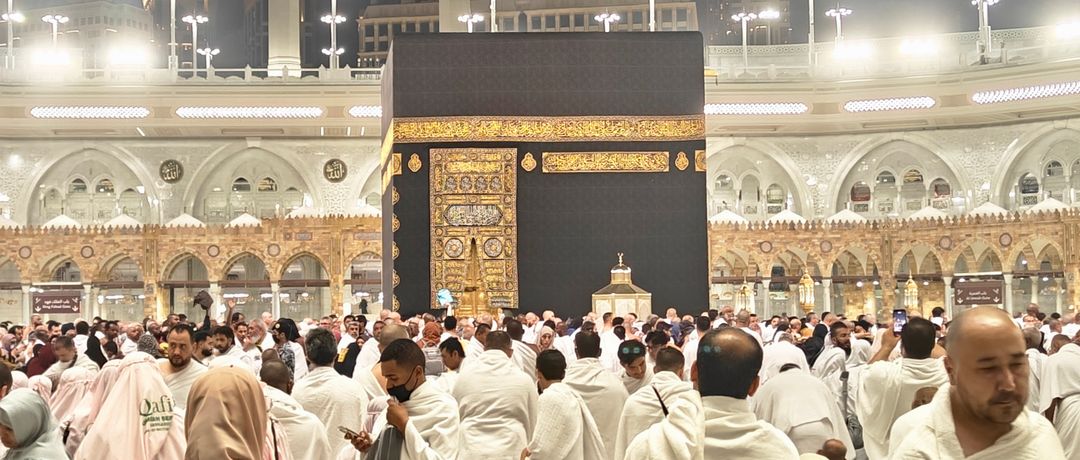
No other trip combines these conditions: the largest crowds on earth, a city you have never navigated, group members who separate constantly, and family at home waiting for updates after every ritual. A working data connection in Makkah is not a convenience. It is how a husband finds his wife after tawaf when the crowd pushed them to opposite gates, and how a group leader keeps twelve pilgrims moving toward the same exit.
There is also now a hard requirement: the Nusuk app. Rawdah visits in Madinah are permit-only through Nusuk, Umrah slots increasingly book through it, and the permits display as QR codes checked at entry. Without mobile data, you cannot book slots when they release or display your permit at the gate. Data went from helpful to mandatory the day those permits went digital.
Which Saudi network holds up in the holy cities
STC has the strongest capacity engineering inside the Grand Mosque, including the mataf and the upper floors, built for millions of simultaneous users in Ramadan. Mobily and Zain both cover the holy sites well in normal periods. If your eSIM provider lets you see which network a Saudi plan uses, prefer STC-based plans for Hajj season and the last ten nights of Ramadan; outside peak crowds, any of the three serves Umrah pilgrims well.
The full pilgrim route is covered end to end: Jeddah airport, the Makkah highway, the Haramain high-speed train, the hotel districts around both mosques, and the ziyarah sites in and around Madinah. The one honest warning is peak Hajj days in Mina and Arafat, where every network slows under load at ritual times. Voice notes and location pins queue and deliver; live video calls are the first thing to fail. Early morning and late night are the clear windows.
How much data does an Umrah trip actually use
Pilgrims consistently use more data than tourists, not less. Live location sharing with your group runs for hours daily and costs roughly 60 to 100MB per day on its own. Add WhatsApp voice notes and video calls home after each visit to the Haram, the Nusuk app, navigation in two unfamiliar cities, and Quran or dua apps that stream audio, and a realistic pilgrim budget is 500MB to 1GB per day.
For a typical two-week Umrah trip, 10GB is the comfortable floor and 20GB removes all rationing anxiety. For Hajj, with its longer stay and heavier family communication, 20GB should be the minimum. The price difference between 10GB and 20GB is usually under ten dollars, which is nothing against the moment you need a video call from Arafat to work.
Buy before you fly: the Jeddah airport problem
King Abdulaziz airport's SIM counters during Umrah and Hajj season have the longest queues in the region, over an hour at peak, after a red-eye flight, with your group waiting and a bus to catch. Every minute of that queue is avoidable. Install your Saudi eSIM at home on Wi-Fi, and your family group chat is working from the taxiway in Jeddah.
Installation is a five-minute job the night before you fly: buy the plan, scan the QR code, turn data roaming on for the eSIM, and leave it dormant until landing. Our step-by-step install guide covers the settings people miss. One warning applies doubly to pilgrims traveling in groups: never delete the eSIM to reinstall later. Most travel eSIMs are single-install, and support tickets cannot always restore them.
Setting up the family back home
WhatsApp voice and video calls work normally in Saudi Arabia, unblocked since 2017, so the setup most pilgrims need is simple: one family WhatsApp group, live location shared into it during rituals, and an agreed voice-note rhythm so nobody panics when a call goes unanswered during prayer.
Two settings save real grief. First, keep your home SIM active in the phone with data roaming off; you will still receive the bank OTP texts you need if you use cards in Saudi Arabia. Second, teach the family at home that message delivery may lag during peak crowd hours at Hajj. A queued voice note that arrives twenty minutes late means congestion, not emergency.
The plans worth buying
Saudi eSIM prices run higher than Southeast Asia but well below airport counter rates. Realistic anchors: around 12 dollars for a small 3GB plan suited to short visits, low twenties for the 10GB plans most Umrah pilgrims should buy, and premium pricing for unlimited plans that suit Hajj groups and heavy video callers. Compare current prices on our Saudi Arabia eSIM page, where plans are sorted by price with the networks they use.
For group leaders: buying the same provider for the whole group simplifies troubleshooting enormously. One provider means one support chat, one install procedure to teach, and one known network behavior inside the Haram instead of three phones on three networks failing differently.
More on umrah and hajj
Staying connected in Makkah, Madinah, and on pilgrimage.