15 min read · Updated August 2026
Umrah cost from India: the real 2026 numbers

Published August 28, 2026 · 15 min read

Search "Umrah package India" and the prices swing wildly: one agent quotes 85,000 rupees, another quotes 2.5 lakh, for what sounds like the same 10 nights in Makkah and Madinah. The gap is rarely the flight. It is almost always hotel distance from the Haram, how many people share a room, and how much margin the operator has folded into a number that looks like one clean figure.
India also runs on its own rulebook. Unlike the UK or the US, Indian passport holders technically can apply for the Saudi tourist e-visa at visa.visitsaudi.com and perform Umrah on it, but in practice almost every agent in India sells a bundled "visa included" package rather than a standalone visa, and pre-verified hotel bookings are required before the visa is even issued. That changes how you should shop for a trip.
This guide breaks the real cost down by component, in Indian rupees, using 2026 package pricing and the current INR to SAR rate, so you can tell whether a quoted price from Mumbai, Delhi or Hyderabad is fair or padded before you pay a deposit.
The short answer
- Budget package (10-14 nights)
- ₹85,000 to ₹1,20,000 per person
- Standard package
- ₹1,20,000 to ₹1,80,000 per person
- Premium package (Haram-view hotels)
- ₹2,00,000 and up
- Visa route
- Bundled "comprehensive" package via a Nusuk-listed agent
- Exchange rate
- 1 INR ≈ 0.039 SAR, 1 SAR ≈ ₹25.4 (Aug 2026)
- Cheapest months
- Muharram, Safar, and Jul-Aug summer off-peak
The visa route Indian pilgrims actually use
On paper, Indian citizens are eligible for the Saudi tourist e-visa, applied for directly at visa.visitsaudi.com, which would let a traveller book their own flights and hotels and perform Umrah independently through a Nusuk permit. A small but growing number of experienced independent travellers do exactly this.
In practice, most Indian pilgrims still book through a travel agent, and for a structural reason rather than habit: agents overwhelmingly sell what is marketed as a Comprehensive Package, meaning visa, hotel and transport bundled together, because Saudi authorities require verified, pre-booked accommodation in Makkah or Madinah before an Umrah-purpose visa is issued. A standalone visa-only booking, common a few years ago, is harder to find from Indian agents now.
This is different from Pakistan, where a self-service tourist e-visa route does not exist at all for Umrah. Indians do have that door open if they want to plan independently, but it demands more legwork: booking Nusuk-verified hotels yourself, applying for the e-visa separately, and arranging your own transport between Jeddah, Makkah and Madinah. For a first trip, most pilgrims find the bundled package simpler, and the price difference between the two routes for an equivalent standard of hotel is smaller than people assume.
Decide your route before you price anything
If you are comfortable booking hotels and transport yourself, the independent e-visa route can save 15 to 20 percent over an agent package for the same hotels. If this is your first Umrah, the bundled package removes a category of paperwork that trips up first-timers, and the premium for that convenience is smaller than it looks.
What a typical package actually costs, tier by tier
Package prices from India cluster into three rough bands, and the spread between them is driven almost entirely by hotel proximity to the Haram and how many pilgrims share a room. A ten to fourteen night trip is the standard length, enough time to cover both cities without hotel costs compounding into something unaffordable.
The figures below reflect a fourteen night trip, per person, sharing a room with two or three others, booked two to three months ahead of travel rather than during a last-minute price spike. A single occupancy room typically adds 40 to 60 percent to the accommodation lines alone.
| Component | Budget | Standard | Premium |
|---|---|---|---|
| Return flight (BOM/DEL/HYD to JED/MED) | ₹32,000 | ₹45,000 | ₹65,000 |
| Umrah visa and agent service fee | ₹12,000 | ₹15,000 | ₹18,000 |
| Makkah hotel (7 nights, shared room) | ₹20,000 | ₹42,000 | ₹85,000 |
| Madinah hotel (5 nights, shared room) | ₹14,000 | ₹28,000 | ₹55,000 |
| Ground transport (Jeddah-Makkah-Madinah) | ₹5,500 | ₹8,500 | ₹13,000 |
| Food (14 nights) | ₹9,000 | ₹15,000 | ₹24,000 |
| Connectivity (eSIM) | ₹1,600 | ₹2,800 | ₹4,500 |
| Total | ₹94,100 | ₹1,56,300 | ₹2,64,500 |
Picking a verified operator without getting scammed
India does not run a single centralised approved-agent list for Umrah the way some neighbouring countries do. The Haj Committee of India regulates the subsidised government Hajj quota through registered Haj Group Organisers, but Umrah is an entirely private-sector market, which means the burden of checking an agent's legitimacy sits more heavily on the pilgrim.
Two checks matter most. First, confirm the agent or their partner is a listed Umrah service provider on the official Nusuk platform, since only Nusuk-registered providers can issue a genuine Umrah permit and hotel verification. Second, check the agent holds a valid IATA accreditation or is a member of a recognised body such as TAFI (Travel Agents Federation of India), and ask directly for their Nusuk provider ID rather than accepting a WhatsApp forward of a certificate.
Pay only into the registered company's current account, never into a personal UPI ID or a proprietor's savings account, and insist on a written itinerary naming the exact hotel, dates, room type and inclusions before transferring a deposit. Agents who quote a headline price well below every competitor for the same season, or who cannot name the specific hotel when asked, are the ones to walk away from.
Red flags that mean walk away
No verifiable Nusuk provider ID, and no IATA or TAFI accreditation you can check independently. Payment requested to a personal UPI ID or savings account. No written itinerary naming the hotel, dates and room type. A price 25 percent or more below every competitor for the same dates. Any one of these alone is reason enough to pick a different agent.
Flights: Mumbai, Delhi or Hyderabad
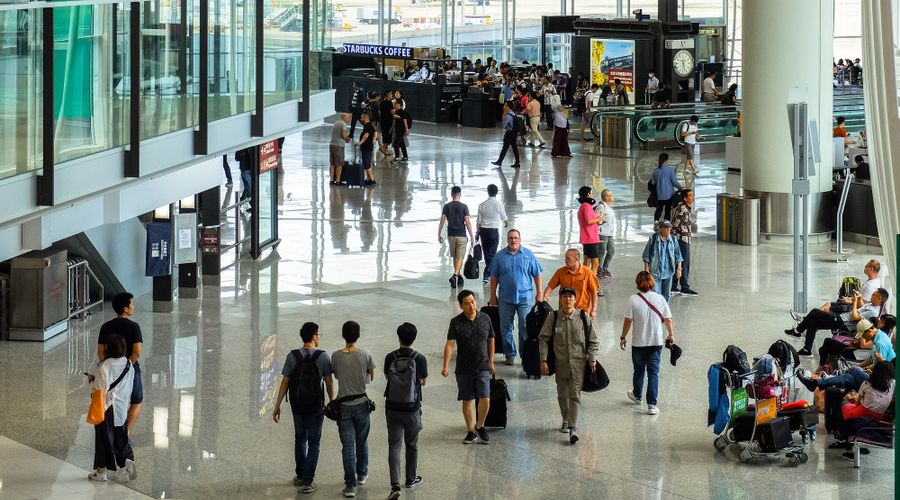
All three of India's largest Umrah departure cities run direct routes to Saudi Arabia. Mumbai has the deepest capacity, with Air India Express, IndiGo, Saudia and Air Arabia connecting through Sharjah all serving Jeddah or Madinah. Delhi and Hyderabad are close behind, and Hyderabad in particular carries a large share of India's Umrah traffic given the size of the pilgrim community across Telangana and Andhra Pradesh.
City of departure matters less than timing. Fares rise sharply in the weeks before Ramadan and during the Indian winter holiday season around December, and sit at their lowest just after Ramadan ends and again through July and August, when demand dips despite the heat in Saudi Arabia.
Most agent packages bundle the flight into the total, but if comparing quotes, ask which airline and whether the route is direct or via a Gulf hub. A one-stop itinerary through Sharjah or Dubai can shave ₹4,000 to ₹8,000 off a package but adds three to five hours and a second security check, which matters more when travelling with elderly parents.
Hotels: what the price tiers actually buy
Hotel distance from the Haram explains most of the gap between a budget and a premium package, and it is worth pinning down in concrete terms rather than the vague "near Haram" wording every brochure uses.
Budget tier hotels in Makkah sit in the Aziziyah or outer Ajyad districts, ten to twenty-five minutes from the Grand Mosque by the shuttle buses most agents run, or a comparable walk. Standard tier moves you into inner Ajyad or Ibrahim Al Khalil, a five to ten minute walk. Premium tier means the towers directly ringing the Haram, including the Abraj Al Bait clock tower complex, where the lobby opens almost straight into the mosque, at three to four times the room rate of budget tier.
Madinah is more forgiving on this trade-off. The mosque area is less congested and even budget hotels tend to sit within a fifteen minute walk of Masjid an-Nabawi, so paying up for proximity there buys less than it does in Makkah. Pilgrims stretching a rupee often do better spending more on Makkah proximity and saving on Madinah, where the walk stays manageable at any tier.
Money matters: exchange rate, cash and cards
As of August 2026, one Indian rupee converts to roughly 0.039 Saudi riyal, meaning one riyal costs approximately ₹25.4. Rates move week to week, so check a current source before exchanging a large sum rather than relying on a figure from a few months back.
Exchange the bulk of your rupees for riyals in India before departure. Rates at reputable money changers in Mumbai, Delhi and Hyderabad are consistently better than the counters at Jeddah airport, and considerably better than exchanging at a Makkah hotel desk, which is the most expensive option of all. Carrying the equivalent of 100 to 150 US dollars in small riyal notes covers taxis, food stalls and small tips for the first couple of days before you settle into a rhythm.
Cards work more widely in Saudi Arabia now than a decade ago, with tap-to-pay accepted at most hotels, restaurants and Haramain train counters. Still, carry cash for smaller vendors near the Haram, barbers, and Ziyarah taxi drivers in Madinah, many of whom deal in cash only.
Simple cash rule
Exchange most of your riyals before leaving India, carry a card as backup, and never keep more cash on your person than you would be comfortable losing. Split cash between hand luggage and hold luggage rather than carrying it all in one place.
When to go: Ramadan, regular season, and the summer dip
Ramadan carries both the greatest spiritual reward, especially the last ten nights, and the sharpest price spike of the year. Makkah hotel rates during that period can run two to three times the normal rate, flights sell out weeks ahead, and package prices climb accordingly. A Ramadan Umrah from India commonly runs ₹1.5 lakh to ₹3 lakh or more per person, against roughly half that off-peak.
Outside Ramadan, the calendar splits into a moderate season and a low season. September through November and January through February bring comfortable temperatures and mid-range pricing, popular with families since it often aligns with Indian school holidays. The Islamic months of Muharram and Safar right after Ramadan, along with July and August, see the lowest package prices of the year, since summer heat above forty degrees keeps casual demand down even though the rituals themselves are unaffected by weather.
For a pilgrim optimising purely on cost, the window right after Ramadan through early Muharram, and again in mid-summer, delivers the same Umrah at ₹20,000 to ₹35,000 less than the September to February season on an otherwise identical package.
What's included, and what quietly isn't
A legitimate comprehensive package from a Nusuk-verified agent includes the return flight, the Umrah visa, hotel accommodation for the stated nights, and ground transport between Jeddah, Makkah and Madinah, usually by coach. That is the floor, and any agent selling meaningfully below what those four components cost is cutting into something you will notice on the ground.
What sits outside the headline price catches first-timers off guard most often. Meals are frequently breakfast only, with lunch and dinner an extra ₹8,000 to ₹15,000 for the trip if arranged rather than eating independently. The Ziyarah tours to Quba Mosque, Mount Uhud and the Qiblatain Mosque in Madinah, and the equivalent Makkah historical circuit, are commonly a paid add-on of ₹1,500 to ₹3,000 per person even on mid-range packages.
Ask about these before signing
- Are lunch and dinner included, or breakfast only
- Is the Ziyarah tour in both cities included or a paid extra
- Is airport transfer on both ends included, or self-arranged
- What happens to your deposit if the visa is refused
- Is a Haramain train ticket included, or is transport by road only
Money-saving moves that don't cost you comfort
Booking two to three months ahead rather than three to four weeks ahead is the single biggest lever, since both flights and hotel allotments tighten as dates approach and agents raise prices in response to scarcity, not because the underlying cost changed.
Travelling as a group of four to six, whether family or a shared booking with a mosque community or neighbourhood group, brings the per-person hotel rate down meaningfully, since quad and quint rooms cost less per head than doubles. Several agents also offer a modest discount for group bookings of six or more submitted together.
Choosing the moderate season over Ramadan, accepting a fifteen minute walk in Makkah instead of paying for the inner ring, and pre-exchanging currency in India rather than at Jeddah airport together typically save ₹30,000 to ₹45,000 on a two-person trip without reducing what the trip actually delivers.
Staying connected in Makkah and Madinah
Even on a fully organised package, your phone carries your Nusuk permit for the Rawdah in Madinah, your group's WhatsApp coordination, and the video calls home every pilgrim ends up making daily. Agents rarely include data in the package price, and buying a SIM at Jeddah airport means joining a queue that regularly runs past an hour during busy periods, right after a long flight, with a group bus waiting.
A travel eSIM installed on your phone before you leave India solves this cleanly: it activates the moment you land, at a fraction of what an airport counter or international roaming from an Indian network would cost for the same data. STC carries the strongest signal inside the Grand Mosque itself, which matters when the mataf is at capacity during Isha or Fajr. Full current plans and prices for the country sit on our Saudi Arabia eSIM guide, with coverage specifics for Makkah and Madinah broken out separately.
Budget more data than an ordinary holiday. Live location sharing with your group runs sixty to a hundred megabytes a day on its own, and between Nusuk, maps and calls home, ten gigabytes is a sensible floor for a two week trip rather than the five gigabytes a typical tourist might use elsewhere. Our first-time Umrah guide covers the full ritual sequence and packing list alongside the connectivity checklist.
Budgeting mistakes Indian pilgrims make
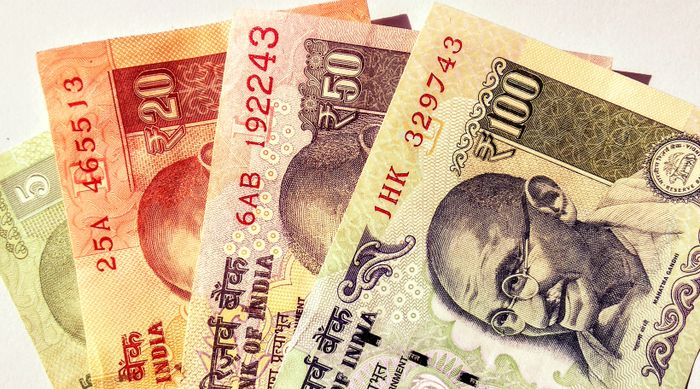
Comparing headline package prices without checking what's included is the most common error. A ₹1,10,000 package with breakfast only, no Ziyarah and a fifteen minute walk to the Haram is not actually cheaper than a ₹1,25,000 package that includes both meals and Ziyarah and sits closer, once you add back what the first one makes you pay separately.
The second is booking through an unverified agent found via a Facebook ad or a distant relative's referral without checking their Nusuk provider status or IATA accreditation, drawn in by a price that undercuts every established operator. When it goes wrong, and it does with some regularity, there is little recourse and no refund path.
The third is underbudgeting for Makkah and Madinah spending money, particularly meals beyond what's included and the small cash payments for taxis, barbers and Ziyarah tips, which typically run ₹8,000 to ₹14,000 per person over two weeks and catch first-timers who budgeted only for the package price itself.
Before you go: data for Saudi Arabia
Everything in this guide assumes a working phone: maps, transport apps, translation, bookings and the group chat. A travel eSIM installed before you fly costs a few dollars and removes the airport SIM queue entirely. Plans for Saudi Arabia start at $11.99 for 3GB, riding the STC network.
City-level coverage notes: using an eSIM in makkah.
Frequently asked questions
How much does Umrah cost from India in 2026?
A budget package for 10 to 14 nights runs roughly ₹85,000 to ₹1,20,000 per person, sharing a room, including flight, visa, hotels and ground transport. Standard packages with closer hotels run ₹1,20,000 to ₹1,80,000, and premium packages with Haram-view hotels reach ₹2,00,000 and above. Hotel distance from the Haram drives most of the difference.
Can Indian citizens apply for the Saudi tourist e-visa to perform Umrah?
Yes, technically. Indian passport holders are eligible for the Saudi tourist e-visa at visa.visitsaudi.com and can perform Umrah on it through a Nusuk permit. In practice, most Indian pilgrims still book through an agent's bundled comprehensive package, since Saudi authorities require verified, pre-booked accommodation before an Umrah-purpose visa is issued.
Which is cheaper to fly from, Mumbai, Delhi or Hyderabad?
City of departure makes only a small difference, usually a few thousand rupees, since all three run direct routes to Jeddah or Madinah with multiple airlines. Booking timing, avoiding the weeks before Ramadan and the December holiday season, moves the price far more than choice of city.
How do I check if an Umrah agent in India is legitimate?
Confirm the agent or their partner is a listed provider on the official Nusuk platform, and check they hold valid IATA accreditation or TAFI membership you can verify independently. Pay only into the registered company account, never a personal UPI ID, and get a written itinerary naming the exact hotel, dates and room type before paying a deposit.
What is the INR to SAR exchange rate right now?
As of August 2026, one Indian rupee is worth approximately 0.039 Saudi riyal, so one riyal costs roughly ₹25.4. Rates shift week to week, so check a current converter before exchanging a large amount rather than relying on an older figure.
Is Umrah cheaper outside Ramadan?
Considerably. Ramadan hotel rates in Makkah can run two to three times the normal price and flights sell out early, pushing a Ramadan trip from India to ₹1.5 lakh to ₹3 lakh or more per person. The cheapest windows are the Islamic months of Muharram and Safar right after Ramadan, plus July and August.
What's usually included in an Umrah package price from India?
Return flight, Umrah visa, hotel accommodation for the stated nights, and ground transport between Jeddah, Makkah and Madinah. Meals beyond breakfast, the Ziyarah tour to historical sites in both cities, and Haramain train tickets are often paid extras even on mid-range packages, so ask specifically before booking.
Do I still need an eSIM if I'm travelling on a package tour?
Yes. Packages rarely include mobile data, and you need working internet for the Nusuk app permit in Madinah, group coordination, and calls home. An eSIM installed before you leave India avoids the long SIM queue at Jeddah airport and costs a fraction of international roaming on an Indian network.
How long does an Umrah visa take to process from India?
Once your agent submits your documents and verified hotel bookings through Nusuk, processing typically takes five to ten business days outside peak season, longer in the run-up to Ramadan when volumes spike. Apply through your agent as early as possible once your travel dates are fixed.
Sources and official references
Browse all travel guides or jump to eSIM plans by destination.