13 min read · Updated October 2026
Best time for Umrah: weather, crowds and prices, month by month

Published October 22, 2026 · 13 min read
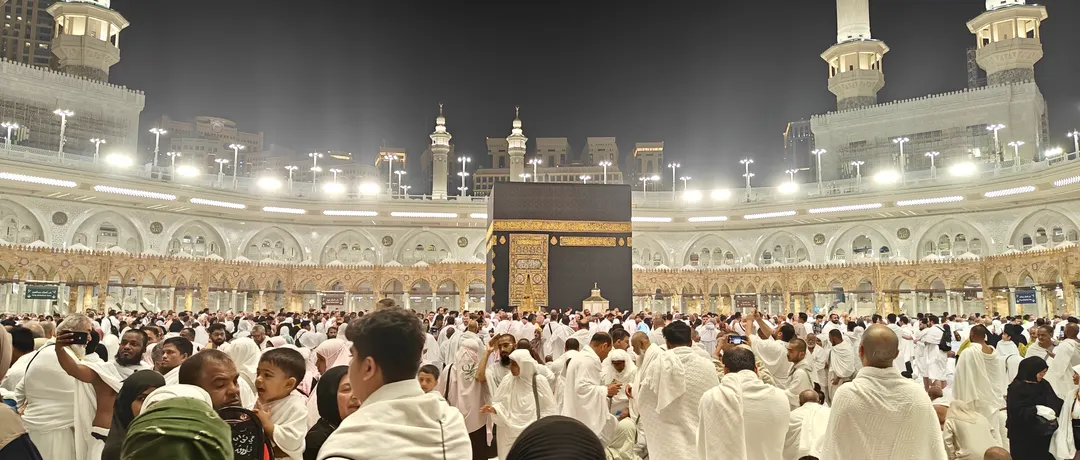
The best time for Umrah for most pilgrims is December to February, when Makkah is coolest, with average highs of about 31 to 33°C, or the quieter weeks outside Ramadan and school holidays. Ramadan, and above all its last ten nights, is the most rewarding and the most crowded and expensive time to go.
There is no single right answer, because the best month depends on what matters most to you: reward, comfort, cost or crowds. This guide sets out each of those month by month for the 2026 to 2027 season, using official climate averages for Makkah, the expected Ramadan and Hajj dates, and the Umrah visa cutoff that closes the season before Hajj.
One rule changes everything about timing: Umrah follows the Islamic lunar calendar, which moves about 11 days earlier each year against the Gregorian calendar. Ramadan and Hajj therefore fall in a different season every few years, and the advice for 2027 is not the advice for 2030.
The short answer
- Best weather
- December to February, average highs about 31 to 33°C
- Hottest months
- May to September, average highs 42 to 44°C
- Ramadan 2027 (expected)
- About 8 February to 9 March 2027
- Hajj 2027 (expected)
- About 14 to 19 May 2027
- Umrah visa pause
- From about two months before Hajj until just after it
- Most crowded
- Last ten nights of Ramadan, school holidays
- Usually quietest
- The summer months after Hajj, outside school holidays
What is the best month for Umrah?
The best month for Umrah depends on your priority. For comfortable weather, choose December, January or February. For the greatest reward, Ramadan, which in 2027 is expected to begin around 8 February. For fewer crowds and lower prices, the months straight after the season reopens following Hajj are usually quietest, but they are also the hottest.
Most first time pilgrims, families with children and older parents are best served by the cooler months between November and February, avoiding the December school holidays if they can. Those who can handle heat and want the quietest Haram should look at the summer weeks after Hajj, outside the school holidays of their home country.
| Your priority | Best time | Trade-off |
|---|---|---|
| Comfortable weather | December to February | December school holidays are busy |
| Greatest reward | Ramadan, expected about 8 February to 9 March 2027 | Most crowded, highest prices |
| Fewer crowds | Summer weeks after Hajj, outside school holidays | Highs of 42 to 44°C |
| Lower prices | Off-peak weeks outside Ramadan and holidays | Often the hotter months |
| Elderly parents or young children | November to February, avoiding holidays | Book early for good hotels |
Makkah weather by month
Makkah is hot all year. The coolest months, December to February, have average highs of about 31 to 33°C and nights around 19 to 21°C, according to the 1991 to 2020 climate normals from NOAA and the Jeddah Regional Climate Center, summarised on Wikipedia's Mecca climate table. From May to September average highs reach 42 to 44°C, with nights that rarely fall below 28°C.
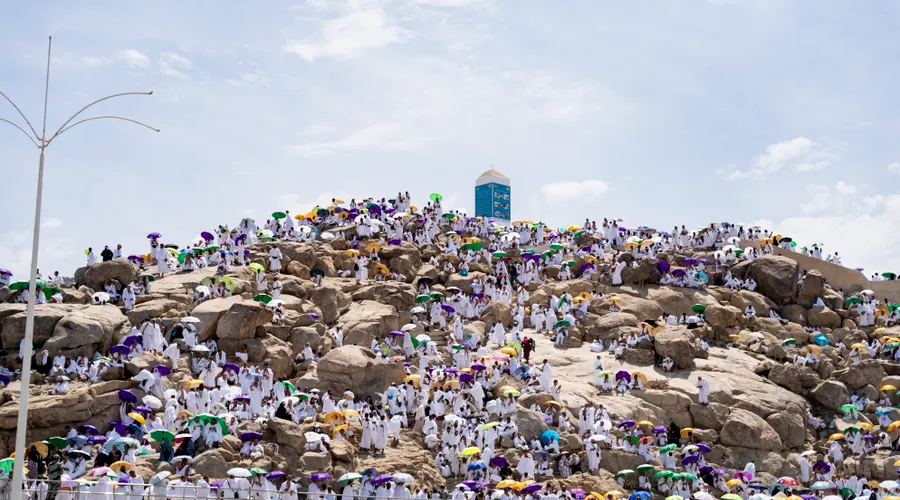
Heat matters more for Umrah than for most trips, because the rites involve walking. Tawaf around the Kaaba and Sa'i between Safa and Marwah together cover several kilometres, often in crowds. In summer, many pilgrims perform their rites late at night or before Fajr, when the marble is cooler and the crowds thinner.
| Month | Average high | Average low | Umrah comfort |
|---|---|---|---|
| January | 30.9 | 19.2 | Best |
| February | 32.6 | 19.9 | Best |
| March | 35.4 | 21.8 | Good |
| April | 39.0 | 25.1 | Hot |
| May | 42.4 | 28.1 | Very hot |
| June | 43.9 | 29.3 | Very hot |
| July | 43.2 | 29.8 | Very hot |
| August | 42.9 | 30.1 | Very hot |
| September | 42.9 | 29.2 | Very hot |
| October | 40.4 | 26.5 | Hot |
| November | 35.6 | 23.4 | Good |
| December | 32.5 | 20.7 | Best |
Is Umrah in Ramadan worth it?
Umrah in Ramadan is worth it if reward is your priority and you can cope with crowds. In a well known hadith reported in Sahih al-Bukhari and Sahih Muslim, the Prophet, peace be upon him, said that Umrah in Ramadan is equal in reward to Hajj. That is why Ramadan, and especially its last ten nights, is the busiest time of the year in Makkah and Madinah.
The practical cost is high. Hotels near the Haram fill early and charge their highest rates of the year, flights cost more, and the mataf and the Rawdah are at their most crowded. Ramadan 1448 is expected to begin around 8 February 2027 and end around 9 March, according to IslamicFinder, with the exact dates set by moon sighting. In 2027 that means Ramadan Umrah falls in the cool season, which makes it more manageable than the summer Ramadans of the 2010s.
If you want Ramadan but not its peak, the first ten days are noticeably calmer than the last ten. Book hotels and flights several months ahead, and check Rawdah permits in the Nusuk app as soon as your dates are fixed. If you stay for Eid al-Fitr, expect the Eid prayer at Masjid al-Haram to draw one of the largest crowds of the year, and arrive well before sunrise to find a place inside.
When can you not do Umrah? The visa pause before Hajj
You cannot travel for Umrah on an Umrah visa in the weeks around Hajj. Saudi Arabia stops issuing Umrah visas about two months before Hajj, sets a last date for Umrah pilgrims to enter, and requires them to leave before the Hajj season begins. Umrah reopens shortly after Hajj ends.
In 2026, Umrah visa issuance stopped around 19 to 20 March, the last entry date was around 2 to 3 April and pilgrims had to leave by 18 April, according to Wego's 2026 Umrah guide. After Hajj, visa issuance for the 1448 season resumed on 31 May 2026, with Nusuk permits from 1 June, as reported by Wego. Hajj 1448 is expected around 14 to 19 May 2027, so expect a similar pause from about late March to the end of May 2027. Always confirm the exact cutoff with the Ministry of Hajj and Umrah or your Umrah provider before booking.
| Event | Date | What it means for Umrah |
|---|---|---|
| Umrah season reopened after Hajj 1447 | 31 May 2026 (visas), 1 June (permits) | Season open |
| Ramadan 1448 | About 8 February to 9 March 2027 | Peak demand and prices |
| Umrah visa pause before Hajj | Expected from late March or early April 2027 | No new Umrah visas |
| Hajj 1448 | About 14 to 19 May 2027 | Makkah restricted to Hajj pilgrims |
| Umrah season reopens | Expected shortly after Hajj 2027 | Quiet, very hot months follow |
Is Madinah cooler than Makkah?
Yes, in winter. Madinah sits on a higher plateau, and from December to February its average highs are about 24 to 27°C with nights around 12 to 14°C, several degrees cooler than Makkah, according to the 1991 to 2020 normals on Wikipedia's Medina climate table. Pack a light jacket for early mornings at Masjid an-Nabawi in January.
In summer the two cities are equally hot, with Madinah's June to August highs of about 43 to 44°C. Most pilgrims spend three to five days in Madinah, either before or after Makkah, and the timing advice is the same for both cities: the cool months are the most comfortable, Ramadan is the busiest, and the Rawdah needs a permit booked in the Nusuk app whatever the season. Our Madinah Ziyarat guide covers the places most pilgrims visit there, and the best hours to see them.
Cheapest time for Umrah
The cheapest time for Umrah is usually the off-peak weeks outside Ramadan, the December holidays and your home country's summer school holidays. The quietest period of all tends to be the summer months straight after the season reopens following Hajj, because the heat keeps many pilgrims away, so hotels near the Haram have more rooms and lower rates.
Prices follow demand rather than the calendar. Ramadan, especially its last ten nights, carries the highest hotel prices of the year, and the weeks around Eid and the school holidays are close behind. Our cost guides for pilgrims from the UK and other countries break down package tiers and how much the timing adds. Booking early is usually worth more than chasing a quiet week, because the best placed hotels sell out first.
If you have to travel at a peak time, a few choices keep the cost down. Hotels a little further from the Haram, served by shuttle buses, cost much less than those facing the gates. Spending more of your nights in Madinah, where hotels are usually cheaper, also helps, and refundable bookings let you switch if prices fall. Flying midweek rather than at weekends, and avoiding the first and last days of school holidays, often saves more than changing the month.
Umrah with family, children or elderly parents
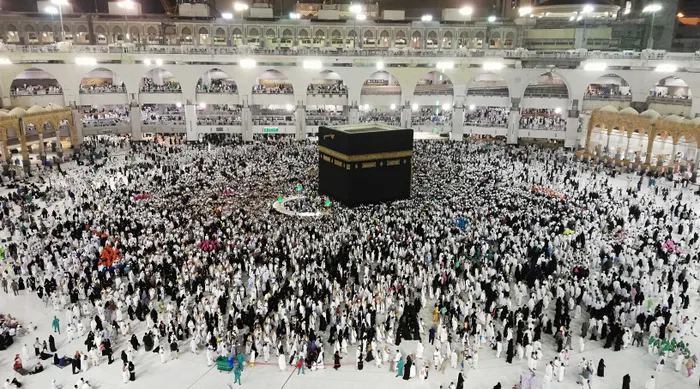
For families and older pilgrims, the ideal window is November to February outside the December school holidays. The cooler weather makes long walks in the Haram much safer, and the crowds are manageable. Avoid the last ten nights of Ramadan with young children or anyone who needs a wheelchair, because the mataf can become difficult to move through.
If school holidays are your only option, choose the start or end of the holiday rather than the middle, stay as close to the Haram as your budget allows, and plan rites for the quieter hours after Isha or before Fajr. Wheelchairs and electric carts are available in Masjid al-Haram, and the ground floor mataf is usually reserved for those in ihram, so check the current arrangements on arrival.
Umrah in winter vs Umrah in summer
Umrah in winter is easier on the body, and Umrah in summer is easier on the budget and the crowds. Between December and February, average highs of 31 to 33°C mean you can perform Tawaf and Sa'i at almost any hour. Between June and September, highs above 42°C push most pilgrims into the night, but the Haram is often calmer and hotel rates lower once the season reopens after Hajj.
Summer Umrah is safe for healthy adults who plan around the heat: rest in the hotel at midday, drink water constantly, use the shaded and air conditioned upper floors, and do the rites after Isha or before Fajr. It is a harder choice for older pilgrims or anyone with heart, lung or kidney conditions, who should talk to a doctor before travelling in the hot months.
| Winter (December to February) | Summer (June to September) | |
|---|---|---|
| Average highs in Makkah | About 31 to 33°C | About 42 to 44°C |
| Crowds | Busy in school holidays and Ramadan | Often quieter outside holidays |
| Hotel prices | Higher, especially December and Ramadan | Often lower |
| Best hours for the rites | Almost any time | After Isha and before Fajr |
| Suits | Families, older pilgrims, first timers | Healthy adults, budget pilgrims |
Umrah timing from the UK, Pakistan and India
The right month from your country is usually just outside its school holidays, because that is when pilgrims from your country travel in the largest numbers and prices from your airports rise. Each country's holidays create its own peak on top of Ramadan.
From the UK, the busiest periods are the summer holidays from late July to early September, Christmas and New Year, and Easter, so November, January and February are good alternatives with cooler weather. From Pakistan, the long summer vacations, which in most provinces run from around June to August, and Ramadan are the peaks; the cooler months outside December are usually better value. From India, school holidays vary by state, but the summer break in April to June and the December holidays are common peaks. Our first Umrah guide walks through the visa and booking steps whichever month you choose, including how to book your Rawdah visit in the Nusuk app as soon as your dates are set.
How the Islamic calendar shifts the best time each year
The Islamic calendar is lunar, so its months move about 11 days earlier each year against the Gregorian calendar. Ramadan, which begins around 8 February in 2027, will begin in late January in 2028 and in mid January in 2029. Over the next few years, Ramadan Umrah therefore stays in the cool season, which is good news for pilgrims who want both reward and comfortable weather.
Hajj moves the same way, from mid May in 2027 to early May in 2028, so the pre-Hajj visa pause moves earlier too. When you plan more than a year ahead, check the expected Islamic dates for your year rather than reusing last year's calendar.
Planning your Umrah dates: a practical checklist
Once you know roughly when you want to go, a few steps lock in the best version of that trip. Start with the Islamic dates, then the visa window, then flights and hotels, and only then the smaller details.
Staying connected matters most in the busiest months, because groups separate easily in a crowded mataf and Rawdah permits are booked in the Nusuk app. A Saudi travel eSIM installed before you fly keeps WhatsApp and Nusuk working from the moment you land; our Saudi Arabia eSIM plans compare prices for a typical Umrah, and our Umrah packing list covers what to bring for each season.
Before you book
- 1Check the expected Ramadan and Hajj dates for your year
- 2Confirm the Umrah visa window and the pre-Hajj cutoff with your provider
- 3Avoid your home country's school holidays unless you must travel then
- 4Book hotels near the Haram early for Ramadan and December
- 5Plan the rites for cooler, quieter hours in summer
- 6Book Rawdah permits in Nusuk as soon as your dates are fixed
Before you go: data for Saudi Arabia
Everything in this guide assumes a working phone: maps, transport apps, translation, bookings and the group chat. A travel eSIM installed before you fly costs a few dollars and removes the airport SIM queue entirely. Plans for Saudi Arabia start at $11.99 for 3GB, riding the STC network.
City-level coverage notes: using an eSIM in makkah.
Frequently asked questions
What is the best time for Umrah?
The best time for Umrah for most pilgrims is December to February, when Makkah's average highs are about 31 to 33°C. Ramadan offers the greatest reward but the biggest crowds and highest prices, and the summer months after Hajj are quietest but very hot.
When is Ramadan 2027?
Ramadan 1448 is expected to begin around 8 February 2027 and end around 9 March 2027, with Eid al-Fitr on 9 or 10 March. The exact dates depend on the sighting of the moon.
When does the Umrah season close before Hajj 2027?
The official date is announced each year, but in 2026 Umrah visas stopped around 19 to 20 March, ahead of Hajj in late May. With Hajj 2027 expected around 14 to 19 May, expect a similar pause from about late March or early April 2027. Confirm with your provider before booking.
Is Umrah cheaper in summer?
Usually, yes. The summer months after Hajj are often the quietest of the year because of the heat, so hotels near the Haram have more availability and lower rates. Prices still rise during school holidays.
What is the hottest month in Makkah?
June is the hottest month, with an average high of about 43.9°C, followed by July at about 43.2°C, according to the 1991 to 2020 climate normals. From May to September average highs stay above 42°C.
Is it better to do Umrah in the first or last ten days of Ramadan?
The last ten nights carry the most reward, including the search for Laylat al-Qadr, but they are also the most crowded and expensive time of the year. The first ten days are noticeably calmer and easier for families and older pilgrims.
Can I do Umrah during Hajj season?
Not on an Umrah visa. Saudi Arabia pauses Umrah visas and Umrah permits for foreign pilgrims for several weeks before and during Hajj, and the season reopens shortly after Hajj ends.
What is the best time of day for Tawaf?
Late at night, after Isha, and the hours before Fajr are usually the coolest and least crowded times for Tawaf and Sa'i, especially in summer. The busiest times are just before and after the five daily prayers.
Is October a good time for Umrah?
October is still hot in Makkah, with an average high of about 40.4°C, but it is cooler than the summer months and usually outside the main holiday peaks. It suits healthy adults who plan the rites for the evening, and prices are often lower than in December or Ramadan.
Is December a good time for Umrah?
December has some of the best weather of the year, with average highs of about 32.5°C, but the school holidays make the second half of the month busy and more expensive. Early December or January usually gives the same weather with fewer crowds.
Sources and official references
Browse all travel guides or jump to eSIM plans by destination.