14 min read · Updated October 2026
Nusuk app and Rawdah permit: how to book, step by step

Published October 7, 2026 · 14 min read
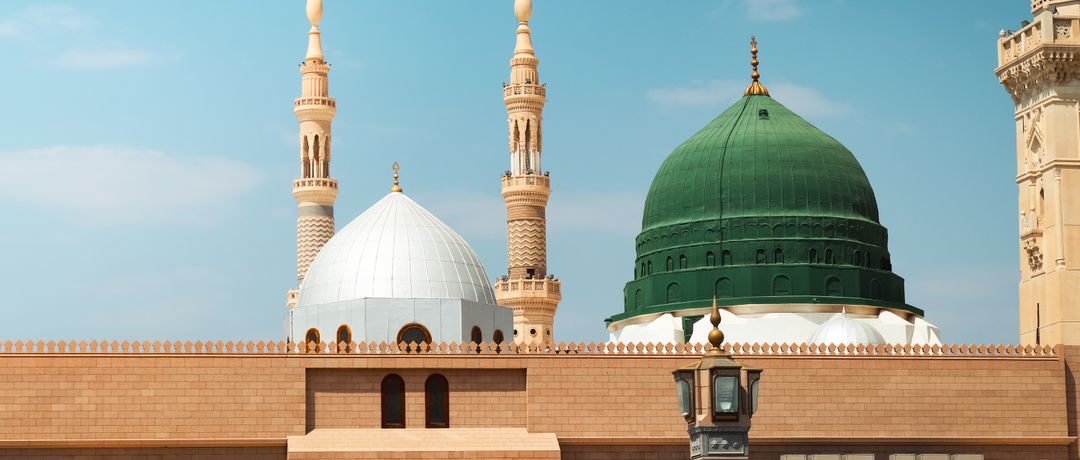
For most pilgrims, the hardest booking of the whole trip is not the flight or the hotel. It is a thirty minute slot on a green carpet in Madinah. The Rawdah, the area of Masjid an-Nabawi between the Prophet's minbar and his resting place, is so sought after that entry now runs entirely through permits issued in the Nusuk app, and those permits are released in small batches that are often gone within minutes.
The same app also issues the free Umrah permit you need to perform Umrah at Masjid al-Haram in Makkah. Neither permit can be bought from an agent, neither costs anything, and both depend on a phone with working internet at the moment you book and the moment you arrive at the gate.
This guide walks through the whole process in the order you will actually do it: setting the app up at home, booking the Umrah permit, chasing a Rawdah slot, what happens at the gate on the day, and what to do when the app throws an error at the worst possible moment. Rules here change often, so where official guidance and pilgrim reports disagree, we say so plainly instead of guessing.
The short answer
- Who runs Nusuk
- Saudi Ministry of Hajj and Umrah, launched September 2022
- Umrah permit cost
- Free, booked in the app, required to enter Masjid al-Haram for Umrah
- Rawdah permit cost
- Free, booked separately from the Umrah permit
- Rawdah slot length
- About 30 minutes, men and women at separate times
- When slots appear
- Usually 7 to 14 days ahead, 3 to 5 days ahead in Ramadan
- Frequency rule
- Long-standing limit of one Rawdah visit per 365 days; check the app for the current rule
- Needs internet
- Yes, for booking, confirming and showing the QR code
What Nusuk is, and what it replaced
Nusuk is the official platform of Saudi Arabia's Ministry of Hajj and Umrah, launched on 26 September 2022 as a single gateway for pilgrims to both holy cities. It replaced Eatmarna, the older app that handled Umrah and Rawdah permits through the pandemic years, and it now sits alongside Tawakkalna, the government services app that Saudi residents already use for identity and health records.
For an international pilgrim, Nusuk does three jobs that matter. It issues the Umrah permit that gets you into Masjid al-Haram to perform Umrah. It issues the Rawdah permit for Masjid an-Nabawi in Madinah. And it can book extras such as hotels, Haramain High Speed Railway tickets, and since late 2025, Zamzam water delivery to your home country. The platform reported more than 51 million users across over 190 countries by March 2026, which tells you how much competition there is for the scarce part: Rawdah slots.
You can download Nusuk free from the Apple App Store or Google Play, and the same account also works on the web at nusuk.sa. Install it at home, not after landing in Jeddah. Setting it up properly takes a few days because of how it links to your visa, which is the first trap most people fall into.
Setting up the app before you fly
Nusuk ties your account to your passport and your Saudi visa. The app cannot find your visa until the visa exists in the Saudi system, and pilgrims regularly report a lag of 24 to 48 hours after the visa is issued before the app recognises it. If you try to register the same day your visa arrives and get a vague error, waiting a day is usually the fix rather than anything you did wrong.
Registration uses an email one-time password rather than a Saudi phone number, so you do not need a local SIM to create the account. Several pilgrim guides report that Gmail addresses receive the code more reliably than Outlook or Hotmail ones, where the message can land in a junk folder or arrive late. Use an email you can actually open on your phone, because you will need it again if you reset a password while travelling.
Every adult needs their own Nusuk account. A husband cannot hold a Rawdah permit for his wife on his own profile, and a parent cannot use one QR code for a grown son. Very young children traveling with a parent generally do not need their own permit, while older children are added to the family's bookings with their own passport details. The exact age threshold has shifted over the years, so check it in the app when you add each traveler.
Setup checklist, about one week before departure
- 1Confirm your Saudi visa has been issued, whether a tourist e-visa or an Umrah visa through an agent
- 2Wait 24 to 48 hours, then install Nusuk from the App Store or Google Play
- 3Register with your passport number, nationality and an email address you can check on the phone
- 4Enter the one-time password from the email and set a password you will remember
- 5Link your visa when prompted and check your name matches your passport exactly
- 6Create separate accounts for every adult in your group, and add children where the app asks
- 7Install a travel eSIM now so the app works the moment you land
The Umrah permit for Masjid al-Haram
Your visa gets you into Saudi Arabia. The Umrah permit gets you into Masjid al-Haram to perform Umrah. They are separate, and holding an Umrah visa does not remove the need for the permit. The permit is free, and no agent, hotel or travel company can sell it to you; if anyone tries to charge for it, that is a warning sign about who you are dealing with.
Booking it is simple compared with the Rawdah. In the app, choose the Umrah permit service, select Masjid al-Haram, pick a date and a time window, and confirm. Nusuk generates a QR code that staff can scan at the entry points to the mataf area. Most pilgrims book theirs for the day they arrive in Makkah, timed for a couple of hours after they expect to reach the hotel, leaving room for a delayed bus from Jeddah.
The app generally allows one active Umrah permit at a time. Pilgrims who want to perform more than one Umrah during a stay usually book the next permit after the first one has passed. Outside Ramadan and the weeks around Hajj, availability is rarely the problem. During Ramadan, slots can appear only a few days ahead, so check the app daily from about ten days before your arrival.

Book the Umrah permit before the Rawdah
Order matters less than people think, but the Umrah permit is the one you cannot do without, and your arrival day in Makkah is fixed by your flight. Lock that in first, then spend your energy on the Rawdah, which is the genuinely competitive booking.
The Rawdah, and why it needs a permit at all
The Rawdah, also called Riyad ul Jannah, is the area of Masjid an-Nabawi between the Prophet's minbar and his house, where he is buried. A hadith describes it as a garden from the gardens of Paradise, and praying there is one of the most longed-for moments of any visit to Madinah. Inside the mosque it is marked by a lighter green carpet, distinct from the red carpet around it.
The space is small, a little over 300 square meters by most measurements, and the number of people who want to pray in it on a single day runs into the hundreds of thousands during busy seasons. Before the permit system, reaching it meant hours of pushing through packed crowds, and the elderly and women often never got close. Timed permits replaced that with short, staffed entry windows.
The result is fairer but scarcer. A slot gives you roughly thirty minutes inside, enough for two rakat and personal duas, and staff move groups along when the window ends. Knowing that in advance helps; pilgrims who arrive expecting to stay as long as they like are the ones who leave feeling rushed.
How to book a Rawdah slot, step by step
The booking itself takes under two minutes once you find an open slot. The hard part is finding one, which the next section covers. Do a dry run of these steps a few days before slots for your dates are likely to open, so that when they do appear you are not learning the menus under pressure.
Your Rawdah booking must fall on a day you will physically be in Madinah, so check your itinerary carefully. Many packages spend four or five days in Madinah, which gives you a decent window. Pilgrims on short stays of two days have far fewer chances and should watch the app more closely.
Booking a Rawdah permit in Nusuk
- 1Open Nusuk and sign in, ideally on a reliable connection
- 2Choose the service for praying in Al-Rawdah Al-Sharifah
- 3Select the traveler you are booking for; every adult books separately
- 4Pick a date inside your Madinah stay; available slots appear as selectable times
- 5Choose a time slot and confirm; the slot is not held while you hesitate
- 6Open the booking and check the QR code, the date, the time and the gate details
- 7Confirm attendance when the app prompts you; unconfirmed permits can be cancelled automatically
When slots open, and how pilgrims actually get one
Nusuk does not publish a fixed release schedule, which is why so much advice online contradicts itself. What pilgrims consistently report is a larger weekly release, commonly around Thursday or Friday, covering dates roughly one to two weeks ahead, plus smaller releases through each day as other pilgrims cancel. During Ramadan the window shrinks to about three to five days ahead.
The practical consequence is that checking once a day at a random time rarely works. People who succeed tend to check repeatedly over a few days, at the top and half of each hour, and in the quiet hours of the Saudi night. Saudi Arabia runs on Arabia Standard Time, UTC+3, all year with no daylight saving, so a pilgrim in New York is seven hours behind in summer and eight in winter.
Switching dates helps more than switching times. If Tuesday is full, Wednesday may have openings, and booking any slot in your stay beats waiting for the perfect one. Some pilgrims also report an on-site option that offers same-day slots when you are physically near the mosque with location services enabled. It is not guaranteed, so treat it as a backup rather than a plan.
| Pattern | When | How reliable |
|---|---|---|
| Main weekly release | Around Thursday or Friday, for dates 7 to 14 days ahead | Most slots, gone fastest |
| Cancellation releases | Through the day, often near :00 and :30 past the hour | Steady trickle of single slots |
| Quiet night hours | About 1:00 to 4:00 am | Less competition from other pilgrims |
| Ramadan window | 3 to 5 days ahead | Very scarce, check several times daily |
| Same-day, near the mosque | On the day, with location enabled | Occasional, never guaranteed |
Men's and women's visits: times, gates and the day itself
Men and women visit the Rawdah at different times, and the permit tells you which gate to use. Pilgrim reports commonly place the men's entry around Gate 37 and the women's entry around Gate 25 of Masjid an-Nabawi, but gate numbers have changed with renovation work before, so trust the details on your permit over anything you read, including this guide.
Women's windows are usually split into a morning period after Fajr and a later period at night, while men's slots tend to run late at night into the early morning. The specific hours you see in the app depend on the date and season. Whatever your slot, arrive at the gate about thirty minutes early. Queues form well before each window, and staff check QR codes before letting each group through.
Late arrival is the most common way to lose a permit. Entry is tied to the slot on the QR code, and if you miss it you generally cannot join a later group; you have to rebook, which may not be possible during the rest of your stay. Charge your phone fully, keep the permit open on screen before you reach the queue, and do not rely on a connection inside a crowd of thousands.

| Detail | Men | Women |
|---|---|---|
| Usual timing | Late night to early morning | Morning after Fajr, and a later night window |
| Commonly reported gate | Around Gate 37 | Around Gate 25 |
| Arrive at the gate | 30 minutes early | 30 minutes early |
| Time inside | About 30 minutes | About 30 minutes |
| What staff check | QR code in Nusuk | QR code in Nusuk |
The 365-day rule, and the confusion around it in 2026
For several years the rule has been one Rawdah permit per person every 365 days. It was introduced to spread access across the millions who visit each year, and it is why repeat visitors, Madinah residents and frequent Umrah travelers often find the app refuses them a second booking.
In 2026 you will find guides online that say this limit has been relaxed and others, updated in the same months, that say it still applies. We have not found an official Ministry announcement that settles it, and the app itself is the only reliable answer for your account. If Nusuk lets you book, the limit does not apply to you. If it refuses with a message about a previous visit, it does.
The practical advice is the same either way: assume your one booking may be your only one for the year, and do not book a slot you are not certain you can attend. A missed slot can count against you just as an attended one would.
Do not book a slot you might miss
Pilgrims sometimes grab the first slot they see, then realise it clashes with the coach to Makkah or a family member's flight. If the 365-day limit applies to your account, a missed permit can cost you the Rawdah for the whole trip and the rest of the year. Check your itinerary before you tap confirm.
Fixing the Nusuk errors pilgrims hit most
Most Nusuk problems fall into a handful of patterns, and almost none of them need a travel agent. Work through the likely cause before assuming your visa or booking is wrong, and if the app keeps failing, try the same account on the web version in a browser, which sometimes succeeds where the app does not.
Keep screenshots of every permit as a backup, but do not treat them as a replacement. Gate staff scan the live QR code in the app, and a screenshot is only useful to show a supervisor if the app refuses to load.
| What you see | Likely cause | What to try |
|---|---|---|
| "Something went wrong" when linking the visa | Visa issued too recently | Wait 24 to 48 hours after issue, then retry |
| No email code arrives | Code filtered as junk, or slow provider | Check spam, resend, or register with a Gmail address |
| ID linked to another account | Passport used on an older account | Reset the password at nusuk.sa in a browser |
| No Rawdah slots shown | Everything booked for those dates | Check other dates, at :00 and :30, and late at night |
| Booking will not confirm | Weak connection, or slot taken mid-booking | Move to stronger signal and try the next slot |
| QR code will not load at the gate | No data inside the crowd | Open the permit before joining the queue |
Data, SIM cards and keeping Nusuk working
Nusuk needs internet for everything that matters: logging in, watching for slots, confirming attendance and displaying a live QR code at the gate. That makes your phone connection part of the booking, not an afterthought. A pilgrim watching for Rawdah slots on hotel Wi-Fi that drops every few minutes is competing at a disadvantage against everyone else refreshing on mobile data.
There are three usual ways to get data in Saudi Arabia. Home roaming works immediately but is expensive on most plans from the US, UK or Pakistan. A local SIM from STC, Mobily or Zain is cheap, but buying one at King Abdulaziz International Airport in Jeddah or Prince Mohammad bin Abdulaziz Airport in Madinah usually means a passport check and a queue after a long flight. A travel eSIM installed before you leave avoids both, and it means Nusuk is online from the moment the plane lands, which is when many pilgrims first need to show an Umrah permit.
STC generally has the strongest coverage inside and around both holy mosques, where tens of thousands of phones compete for the same towers at prayer times. Current plans, prices and network details are on our Saudi Arabia eSIM guide, with notes specific to Madinah and Makkah.
| Activity | Approximate data |
|---|---|
| Nusuk logins, slot checks and QR codes | 200 to 400 MB |
| Maps between hotel, mosque and sites | 300 to 600 MB |
| WhatsApp messages and group location sharing | 1 to 1.5 GB |
| Daily video calls home (10 to 15 minutes) | 3 to 5 GB |
| Photos, social media and browsing | 2 to 4 GB |
| Sensible total to buy | 10 GB or more |
Etiquette inside the Rawdah
The thirty minutes inside go quickly, so decide beforehand what you want to do with them. Most pilgrims pray two rakat, then spend the rest of the time in personal dua. Writing down the names of people who asked you to pray for them saves you from trying to remember them in the crush.
Staff keep the groups moving, and they will ask you to make space for others when the window ends. Leaving calmly when asked is part of the visit; the people waiting outside have often tried for days to get their slot too. Avoid filming inside, keep your phone on silent, and give the elderly and people in wheelchairs room near the front.
If this is your first pilgrimage, our complete first Umrah guide covers the rituals in Makkah and the order of a typical trip, and our Umrah cost guide for US pilgrims breaks down what the whole journey costs.
Before you go: data for Saudi Arabia
Everything in this guide assumes a working phone: maps, transport apps, translation, bookings and the group chat. A travel eSIM installed before you fly costs a few dollars and removes the airport SIM queue entirely. Plans for Saudi Arabia start at $11.99 for 3GB, riding the STC network.
City-level coverage notes: using an eSIM in madinah.
Frequently asked questions
Is the Rawdah permit free?
Yes. Rawdah permits are issued free of charge through the Nusuk app. No agent, hotel or tour company can sell you one, and anyone charging a fee for a Rawdah permit is not offering an official service.
Do I need an Umrah permit if I already have an Umrah visa?
Yes. The visa lets you enter Saudi Arabia, while the free Umrah permit in Nusuk is what allows you into Masjid al-Haram to perform Umrah. You book it yourself in the app and show the QR code at the entry points.
How far in advance can I book the Rawdah?
Slots usually appear about 7 to 14 days ahead, with a larger release commonly reported around Thursday or Friday. During Ramadan the window is shorter, often 3 to 5 days ahead. Cancelled slots also reappear through the day.
Why does Nusuk show no Rawdah slots available?
Usually because every slot for those dates is already booked. Check other dates in your Madinah stay, refresh at the top and half of each hour, and try the quiet hours between about 1:00 and 4:00 am Saudi time, when fewer pilgrims are competing.
Can I visit the Rawdah more than once a year?
The long-standing rule is one Rawdah permit per person every 365 days. Some 2026 reports say this has been relaxed, but we have not seen an official announcement. If Nusuk lets you book a second visit, the limit does not apply to your account.
What are the Rawdah timings for women?
Women visit at separate times from men, usually in a morning window after Fajr and a later night window, entering through their own gate. Exact hours vary by date and season, so use the time and gate shown on your permit in the app.
Can I book a Rawdah permit for my wife or parents?
Each adult needs their own Nusuk account and their own permit. You can help them set up and book on their phones, but one person's QR code cannot be used for someone else. Young children are handled differently and are added as the app instructs.
Does the Nusuk app need a Saudi SIM card?
No. You register with your passport and an email one-time password, so a Saudi number is not required. You do need working internet in Saudi Arabia to confirm bookings and show your QR code, which is why many pilgrims install a travel eSIM before they fly.
What happens if I arrive late for my Rawdah slot?
Entry is tied to the time on your permit, so late arrivals are generally turned away and have to rebook, which may not be possible during the rest of the trip. Arrive at the gate about 30 minutes early with the permit already open on your phone.
Sources and official references
Browse all travel guides or jump to eSIM plans by destination.